Jobs in Germany for Americans & Navigating German Taxes: How to Find Employment as a Military Spouse, Veteran, Retiree, or Federal Government Employee
It’s no surprise that one of the most common questions I get from incoming military families is whether there are jobs in Germany for Americans. It’s a valid concern, particularly for military spouses who want to keep working to support childcare costs, travel opportunities, and long term career growth.
Living and working in Germany as an American can feel overwhelming at first, especially when you’re navigating rules overseas for the first time.
Trust me, I get it.
We’ve been living in Germany with the U.S. military since 2014, and I have personally tried just about every employment option available.
USAJobs, home-based businesses, mini jobs in the local economy, volunteering, and eventually building my own private business.
The good news
There are legitimate ways to work in Germany as an American. The key is understanding which jobs provide SOFA status (Benefits under the Status of Forces Agreement), which ones do not, and how taxes and employment rules actually work overseas.
Below is a realistic breakdown of the most common and proven employment paths for Americans living in Germany with the US military.
American Federal Government Jobs in Germany
Federal government jobs are one of the most stable and straightforward ways for Americans to work in Germany.
I’d even argue that federal government jobs are relatively easy to find overseas, if you’re flexible about the type of role. Building a long-term career, however, is a very different story.
These positions already understand SOFA status, overseas benefits, and the military lifestyle. Many also come with built-in protections related to taxes, residency, and healthcare.
Common federal employment categories include:
- GS Civil Service positions
- NAF positions
- DoDEA and education roles
- Healthcare and medical support roles
- Cherokee Federal
- Valor Healthcare
- Sterling Medical
- Administrative and logistics roles
Most federal government jobs overseas are posted on USAJobs, and competition can be high. Having a federal resume that is properly formatted and tailored for overseas positions is critical.

How to use USAjobs
USAJobs is the primary platform for federal employment overseas, but it requires patience and strategy.
Tips that actually help:

- Filter by location using “Germany” or specific garrisons
- Set saved searches and alerts
- Apply early and often
- Tailor your resume for each position
- Do not rely on one application
- Keep copies of your written answers since job application questions are often repeated
Helpful career links
Federal Government Jobs: NAF vs Appropriated Fund
This is one of the most misunderstood areas of overseas employment.
Appropriated Fund (APF) Jobs
These positions are funded directly by Congress and typically include GS and civil service roles. They often provide stronger benefits and higher pay, but are also more competitive.
Non-Appropriated Fund (NAF) Jobs
NAF jobs are funded by revenue-generating services like MWR, CDCs, and base facilities. These jobs are often easier to obtain and can be a great entry point for military spouses overseas.
Examples of NAF jobs include:

- Child Development Centers and School Age Care
- MWR facilities (Shoppette, PX/BX,Fitness Centers, Library, etc)
- Lodging and hospitality
NAF jobs can still provide SOFA status and legal authorization to work on base.
Helpful career links:
Logistical Support Jobs on Base That Provide SOFA Status
Many Americans overlook logistical support roles that exist on U.S. installations throughout Germany.
These jobs are critical to daily base operations and often come with SOFA status because they directly support the U.S. military mission.
In other words, these jobs allow you to travel, work, and stay in Germany until the duration of your employment contract.
Common examples include:

- AAFES Exchange
- DeCA Commissary
- Education Centers
- Banking and financial services
- Community partner organizations
- Edelweiss Lodge and Resort
Helpful career links:
Contracting Job Opportunities in Germany
Contracting jobs are another major employment path for Americans living overseas, especially within the U.S. military community.
These positions are typically with U.S. based companies that hold government contracts in Germany and support military operations, logistics, IT, healthcare, construction, and administrative services. Contractors play a critical role in keeping installations running smoothly and are found at nearly every military base across Germany.
Common contracting roles include:
- IT and cybersecurity
- Engineering and technical services
- Medical and healthcare support
- Logistics and transportation
- Administrative and operational support
Many contracting jobs offer SOFA status, but this is not guaranteed and depends entirely on the employer and the specific contract. This is something you should always confirm before accepting a position, as SOFA status directly impacts your ability to live and work in Germany legally.

How to Prepare for a Contracting Job Overseas
If contracting is your goal, preparation is key and it is best done before you arrive in Germany.
Two of the biggest prerequisites for most contracting roles are a valid security clearance and industry specific certifications. For example, many IT and cybersecurity positions require certifications such as Security+ or similar credentials, in addition to an active clearance.

While it is not impossible to obtain these requirements overseas, it is significantly easier to complete them while still in the United States. Stateside, you have greater access to testing centers, training programs, clearance sponsors, and overall resources. The clearance process itself can take months, and starting it overseas can delay your ability to work once you arrive.
Taking the time to qualify yourself in the United States allows you to hit the ground running overseas. It also maximizes the amount of time you can actually work and earn while living in Germany, rather than spending your tour waiting on paperwork or credentials.
Contracting jobs are especially attractive for military spouses and families who relocate frequently. Because contractors are needed at nearly every installation worldwide, these roles offer portability, competitive pay, and benefits that often exceed what you will find in many traditional base jobs through USAJobs.
Pro Tip: Before accepting any civilian position overseas, make sure the job includes tuition assistance for your children to attend a local DoDEA school. Without it, you could be paying out of pocket anywhere from $26,000 to over $29,000 per child for K–12 education. Learn more here.
For families planning multiple overseas moves, contracting can be one of the most stable and financially rewarding career paths available, with many positions offering SOFA status depending on the employer and specific contract. Always confirm this detail before accepting a role.

Helpful career links:
Military Spouse Jobs in Germany
Military spouses often need flexible employment options due to PCS cycles, childcare, and SOFA restrictions.

Below are some of the most realistic paths I see working overseas.
Home-Based Businesses on Base
Home-Based Businesses (HBBs) allow military spouses, service members, and DoD civilians in Germany to legally operate certain businesses out of their on-post housing with proper approval.

Common examples include:
- Pet Care
- Hairstyling
- Online services
- Consulting & Coaching
- Food Industry
- Photography
- Small retail or service businesses
To operate an HBB legally, you must obtain approval through your local Army Community Service or Family & MWR office, with final authorization from the garrison commander. The approval process has been streamlined in recent years and is often completed within about 60 days.
It typically requires submitting an application, complying with installation and host-nation rules, and securing any required licenses or documentation. Operating a business on base without official HBB approval can violate policy and lead to penalties.
Helpful career links:
*For all other locations, google “HBB (location or base/post)”
Military One Source: Spouse Education & Career Opportunities (SECO)
The Spouse Education and Career Opportunities (SECO) program through Military OneSource helps military spouses explore careers, gain education and credentials, and navigate portable employment no matter where the military sends them.
It offers free career coaching, tools for resume building and job searching, education guidance, and resources designed specifically for the realities of military life and frequent PCS moves.
Helpful career links:
Mini Jobs in the German Economy
Mini jobs are part-time jobs within the German system and are commonly used by military spouses off base.
Important to know:
- Maximum earnings of €603 per month
- Maximum €7,236 per year
- Flexible schedules with limited hours and income
- Only one mini job allowed alongside a full-time job
- Exempt from most taxes and social contributions
- Exceeding limits triggers German tax and social security obligations
- Legal under SOFA status
Mini jobs are common in restaurants, shops, and local businesses near U.S. installations.
I’ve done this myself.

I worked a mini-job at a local restaurant (pic above) and later as a part-time content creator with EuroTrip Adventures.
My advice if you’re here temporarily, find an English-speaking local business where you can provide value.
Use the income to:
- Travel with family
- Explore Germany
- Learn the local language
- Enjoy the experience without financial stress
Helpful career links:
Full Time Jobs in the German Economy
Working in Germany on the local economy as a military spouse can feel intimidating at first. Many spouses assume it is either impossible or not worth the effort because of the language barrier, unfamiliar hiring practices, and cultural differences in the workplace.
And to be honest, it is tougher than finding a job on base or with the U.S. government. But it is absolutely possible.
Every year, military spouses successfully find local employment here, even without fluent German. The key is understanding where your strengths fit and being realistic about the types of roles available.
Pro Tip: Before applying for any local job in Germany, make sure you understand how SOFA status impacts your taxes, benefits, and labor protections, since these rules apply to most military spouses working on the German economy and can directly affect what jobs you can accept and how you are paid.
Most military spouses who work on the local economy start in English speaking roles.
Germany has a strong demand for English services, especially in areas like education, childcare, hospitality, tourism, customer support, administration, marketing, and international companies that operate in English. If you do speak German, even at a basic or conversational level, your opportunities increase significantly.
But a lack of German does not automatically disqualify you. Many employers value native English speakers and are used to working with internationals, especially in communities near U.S. bases.
One of the biggest advantages of working locally is the quality of life benefits that come with the German system.
While the process takes patience and flexibility, working on the local economy can provide not just income, but stability, professional growth, and a deeper connection to life in Germany beyond the base gates.
Employees often receive far more paid time off than what is typical in the U.S., along with generous sick leave protections. Military spouses with legal residence and local employment may also qualify for Kindergeld, Germany’s monthly child benefit, which can make a meaningful difference for families.
Helpful career links:
Facebook Groups: Jobs in Germany for Americans
Facebook groups & pages can be powerful resources for finding employment in Germany because they connect you directly with people already working in the local economy, government roles, and contract positions who regularly share job leads, referrals, and real-world advice.
The groups or pages listed below are a great place to start networking with like-minded individuals seeking English-speaking opportunities in Germany, including contract work, government jobs, and positions on the local economy.
Remote Telework and Working for U.S. Employers
If you’re physically present in Germany for more than 183 days and perform telework in Germany, you may be subject to German income taxation, even if your employer is American.
An important exception exists for U.S. government employees. You’ll find more on taxes below.
Helpful career links:
Pro Tip: If you leave a U.S. job due to a PCS, it may be possible to claim unemployment while living overseas.
This depends on the state you are leaving, so always check directly with that state’s unemployment office.
Employment Support From Each Military Installation in Germany
This list highlights official, on-base employment resources across U.S. Army and Air Force installations in Germany, including garrison websites, MWR pages, and Force Support Squadrons.
These are trusted, first-stop locations where job announcements are posted directly by the installation, making them some of the most reliable places for military spouses and civilians to find legitimate employment opportunities.
USAG Bavaria Employment
See a FULL list of US Job Listings for USAG Bavaria (and other bases) here.
The official U.S. Army Garrison Bavaria employment page lists civilian, NAF, and spouse job opportunities across Grafenwöhr, Vilseck, and Hohenfels. This is one of the primary on-base sources for verified job announcements.
USAG Rheinland-Pfalz Employment
This site covers employment opportunities across the Kaiserslautern Military Community (KMC). It publishes current NAF, civilian, and support positions tied directly to the installation.
86th Force Support Squadron Employment & Career Assistance
The 86th FSS page supports Ramstein Air Base with employment resources, job listings, and career assistance for military spouses and civilians. It’s an official Air Force pathway to on-base jobs and hiring support.
USAG Stuttgart Employment
This is the official employment portal for U.S. Army Garrison Stuttgart. It highlights job announcements, hiring offices, and civilian employment options tied to the Stuttgart military community.
USAG Wiesbaden MWR Local Jobs Listing
Wiesbaden MWR maintains a local jobs listing that includes NAF, part-time, and community positions. This is a go-to resource for on-base and installation supported employment.
Spangdahlem Air Base Employment Opportunities
This official Spangdahlem Air Base page outlines employment options available to civilians and spouses. All postings are vetted and tied directly to the installation.
52d Force Support Squadron Civilian Personnel Office
The 52d FSS Civilian Personnel Office supports hiring and workforce management at Spangdahlem. It’s a trusted source for Air Force civilian job information and employment guidance.
USAG Ansbach Careers
USAG Ansbach’s careers page lists installation level employment opportunities, including NAF and civilian roles. This is the official starting point for jobs tied to the Ansbach military community.
Installation Wide Employment Support
Army MWR
Army MWR provides employment readiness resources, job programs, and career support services for soldiers, spouses, and families across installations worldwide.
Army Community Service (ACS)
ACS supports military families with employment readiness, resume help, job search assistance, and transition support. Every Army post has an ACS office offering local guidance.
Employment Readiness Program (ERP)
Pro Tip: Search “Army Community Service (ACS) + your post name” for local Army support, or “Airman Family and Readiness Center (AFRC) + your base name” for Air Force installations. These offices often know about job openings before they’re widely advertised.
The Employment Readiness Program focuses specifically on helping military spouses and family members prepare for and find employment, both on and off base.
German Taxes: What Americans Living in Germany Need to Understand
Taxes are one of the biggest sources of pain confusion for Americans working in Germany, especially for military families. The good news is that most people drastically overestimate their tax exposure.
Let’s break this down clearly.
U.S. Military and Federal Government Income Is Not Taxed by Germany
This was reinforced by a German finance court ruling in Rheinland-Pfalz, released on November 23, 2022, which confirmed that U.S. service members covered under SOFA cannot have their military income taxed by German authorities.
Under the NATO Status of Forces Agreement (SOFA), Germany cannot tax U.S. military pay.
This protection also generally applies to U.S. federal government employees working overseas in an official capacity, which is why government telework is treated differently than private-sector remote work.
Bottom line:
If your income comes from U.S. military service or qualifying federal employment, Germany does not tax that income.
Hobby vs Business Under German Tax Law
Where things get tricky is side income, home-based businesses, and online work.
Germany does not decide tax liability based on how much you earn. They decide it based on intent.
Hobby (Liebhaberei)
A hobby means you are doing something for personal enjoyment, not to make consistent profit.
Examples include:
- Selling something once or twice
- Occasional photography or crafts
- One-off referrals without a system
If classified as a hobby:
- No income tax
- No VAT
- No business registration
- You cannot deduct expenses or losses
Business or Self-Employed Activity
An activity is considered a business if it is:\
- Independent
- Ongoing or recurring
- Intended to generate profit
Even if the income is small, profit intent makes it a business.
If classified as a business, you may need to:
- Register with the Finanzamt or Gewerbeamt
- File a German tax return
- Potentially deal with VAT
There is no official minimum income where business income can simply be ignored. If the activity is a business, it is technically taxable from the first euro. That said, several thresholds significantly reduce or eliminate what you actually pay.
Key German Small-Business Thresholds
VAT Small Business Rule (Kleinunternehmerregelung)
- €22,000 turnover in the previous year
- €50,000 expected in the current year
Below this, you can opt not to charge VAT. You still declare income, but no VAT collection or filings.
Trade Tax (Gewerbesteuer)
- €24,500 annual profit
Below this, no trade tax is paid.
Income Tax Personal Allowance (Grundfreibetrag)
- €11,604 total annual income
Below this, no income tax is due, but filing may still be required if you are registered as self-employed.
Occasional Side Income (Nebeneinkünfte)
- Up to €410 per year
If truly occasional and not recurring, this may be ignored.
Pro Tip: Thinking about living in Germany? Learn how to get your German Residency Permit
Practical Examples of Business in Germany
Example 1: True Hobby
You sell one photo online for €50 as a one-off.
No ongoing sales. No system.
→ Hobby. No tax reporting required.
Example 2: Small Online Business
You earn €100 per month in affiliate commissions.
Recurring income with profit intent.
→ Business activity.
You must register and file, even if no tax is ultimately owed.
Example 3: Business Under €22,000
You earn €8,000 per year from a side business.
→ Still a business.
→ No VAT under the small-business rule.
→ Likely no income tax due, but filing required.
How the German Tax Office Decides
The Finanzamt looks at:
- Profit intent over time
- Repeated or structured activity
- Advertising, websites, invoices
- Regular customers or payments
If it looks like a business, they treat it as a business.
If it is classified as a Hobby (Liebhaberei):
- No taxes owed
- No deductions allowed
Important Reality for Most Military Spouses
Here’s what often gets missed.
Most military spouses, especially those running Home-Based Businesses, do not meaningfully fall into the German business system because:
- They are in Germany temporarily
- They earn small amounts
- They do not sell to the German economy
- They operate under U.S. military rules on base
That does not mean “ignore taxes,” but it does mean the risk and exposure are often far lower than people fear.
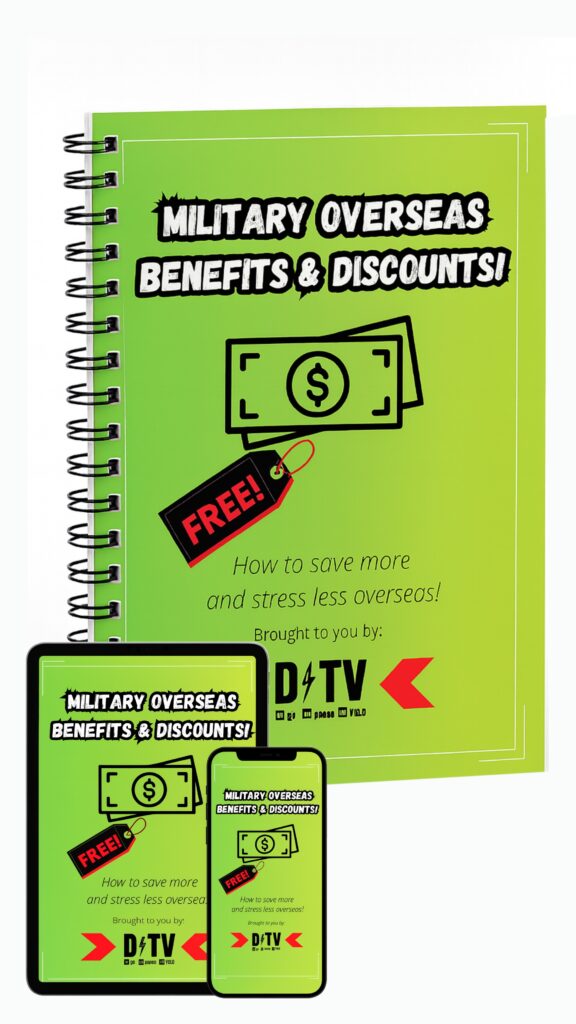
Pro Tip: Download our FREE Benefits Guide to learn about military benefits and discounts overseas!
German Small Business Rule(Kleinunternehmerregelung)
Although this does not apply to many military spouses or U.S. government employees living in Germany, it is still helpful to understand in case you ever decide to start a small business inside the German system.
The Kleinunternehmerregelung is a special rule in German tax law (§ 19 UStG) designed for very small businesses and freelancers.
If you qualify under this rule:
- You do not charge German VAT (normally 19%) on your invoices
- You do not file regular VAT returns
- Every invoice must include this line:
“Gemäß § 19 UStG wird keine Umsatzsteuer berechnet.”
This rule exists to reduce bureaucracy for very small businesses.
Revenue Thresholds That Matter
Eligibility is based on gross revenue (Umsatz), not profit.
- Previous year: Up to €22,000
- Current year (expected): Up to €50,000
Important distinction:
- Gross revenue = all money clients pay you
- Net income = what remains after expenses
Germany looks at the gross number, not what you keep.
Simple Example
- You invoice €18,000 in 2024
→ Under €22,000, so you qualify for 2025 - You invoice €30,000 in 2025
→ Under €50,000, so you can stay in the rule for that year - Because €30,000 exceeds €22,000
→ In 2026, you must begin charging 19% VAT
Even if your actual profit was only €5,000, the Finanzamt still counts the €30,000.
Important Things to Know
- You cannot reclaim VAT on business expenses like software, ads, or equipment
- If you exceed the thresholds, you must switch to the normal VAT system the following year
- Many sales to U.S. or non-EU clients are already outside German VAT rules
The difference is:
- Kleinunternehmerregelung = no VAT and no VAT reporting
- Normal VAT system = VAT-exempt invoices still require reporting
Why This Often Doesn’t Apply to Military Families
Most military spouses and government-connected individuals:
- Are in Germany temporarily
- Earn modest side income
- Operate under SOFA or on-base rules
- Do not sell to the German economy
That’s why many never enter the German VAT system at all (And I 100% support this).
Bottom line: To avoid charging 19% VAT in Germany:
- Your gross turnover must stay under €22,000 in the previous year
- And under €50,000 in the current year
This rule exists for small, local German businesses, but knowing it helps you avoid surprises if your situation ever changes.
Pro Tip: Check out the “Auslander App” for expat jobs in Germany and content creator “Symoné B” for Gov Tech IT roles.
Self-Employment Tax Waiver for Americans in Germany (Berlin Form)
This section will not apply to most military spouses or government employees, but if you run a legitimate business or freelance while living in Germany, this is important to understand.
Normally, Americans who are self-employed must pay U.S. self-employment tax, even if they live overseas.
That tax is 15.3% of your net profit, which funds:
- Social Security (12.4%)
- Medicare (2.9%)
However, because Germany and the U.S. have a social security totalization agreement, Americans who are self-employed in Germany can apply for a self-employment tax waiver, often referred to as the Berlin Form (download below).
What the Self Employment Waiver Does
If approved:
- You do not pay U.S. self-employment tax (Social Security and Medicare)
- This prevents you from being taxed into two retirement systems at the same time
This waiver has nothing to do with:
- The Foreign Earned Income Exclusion (FEIE)
- The Foreign Tax Credit (FTC)
Those are separate U.S. tax tools.
Who does the Berlin Form Apply To?
This is relevant if:
- You live outside the U.S. (Germany)
- You are self-employed or freelancing
- Your business is operated while physically in Germany
- You earn recurring income with profit intent
Your clients can be anywhere in the world, including the U.S.
Important Rules to Know
- You must apply for the waiver yourself through German authorities
- Tax preparers and software do not automatically do this for you
- You should obtain the waiver before filing your U.S. tax return
- Your U.S. tax return is filed electronically, but the waiver is mailed separately to the IRS
Foreign Earned Income Exclusion (FEIE), Foreign Tax Credit (FTC) & Self Employment Tax Wavier
For Americans living in Germany with the military, tax rules often sound more complicated than they actually are. The Foreign Earned Income Exclusion (FEIE), the Foreign Tax Credit (FTC), and the Self-Employment Tax Waiver exist to prevent double taxation, but they apply to different taxes and income types.
Self-Employment Tax Waiver
- Covers Social Security and Medicare (15.3%)
- Prevents double contributions
- Applies to self-employed Americans in Germany
Foreign Earned Income Exclusion (FEIE)
- Covers U.S. income tax
- Allows exclusion of foreign income (up to an annual limit)
- Does not cover Social Security or Medicare
- Online tax websites like Turbo Tax have user friendly instructions on how to file with it
Foreign Tax Credit (FTC)
- Credits U.S. taxes for income taxes already paid to Germany
- Prevents double income taxation
You may use all three, depending on your situation. Check with your tax official to understand which one applies to you.
Why This Rarely Applies to Military Families
- Earn small or occasional income
- Operate under SOFA or on-base rules
- Do not enter the German social system
- Do not register German businesses
Most military spouses:
In those cases, this waiver usually does not apply.
But for Americans running real, registered businesses in Germany, this waiver can save thousands of dollars per year.
Bottom line: If you are self-employed in Germany:
- Without the waiver, the U.S. may charge an extra 15.3% on top of German taxes
- With the waiver, you generally pay only German social contributions
- FEIE and FTC handle income tax
- The waiver handles Social Security and Medicare
Understanding the difference can prevent expensive mistakes.
Tax Takeaway for your Job in Germany
- U.S. military pay is not taxed by Germany
- Federal government employment is treated differently than private telework
- Hobby vs business is determined by intent, not income
- Small business thresholds eliminate much of the actual tax burden
- Filing requirements are more common than tax payments
Understanding these distinctions is the difference between feeling stuck and confidently moving forward overseas.
Education, Certifications, and Volunteering
Sometimes the smartest move overseas is to invest in yourself.
For a lot of military spouses, being overseas is one of the few chapters in life where you finally have the time to focus on personal growth, go back to school, earn certifications, volunteer, and position yourself for what’s next.
Options include:
- Earning a degree or certification from the Education Center on base/post
- Volunteering to build experience and networks in the local community
- Participating in spouse employment programs
Helpful career links:
Learn the Language Like It’s Your Job
Learning German will expand your employment options and daily quality of life more than almost anything else.
Even basic survival German makes a massive difference off base.
The goal, especially for Americans living in Germany with the military, is functional German, not perfection.
Here’s what worked for me…
Step 1: Learn the Basics First
Start with the fundamentals, memorizing:
- Numbers
- Colors
- Days of the week and months
- Common phrases
- Food and everyday items
One of the simplest tools that helped me early on was a visual picture book, which made it easier to connect words with objects instead of translations.
Because I’m a visual learner, I also wrote German words on sticky notes and placed them all over the house. Kitchen items, bathroom objects, bedroom furniture. Everywhere.
It forces your brain to read German constantly, even when you’re not actively studying.
To this day, I will never forget the word “die Waage” (the scale). I saw it every single time I walked into the bathroom. Even though I’ve never used that word in conversation, it stuck permanently.
Step 2: Use TV, Movies, and Subtitles to Your Advantage
We all watch TV anyway, so you might as well turn it into a learning tool.
I still watch TV with German subtitles, even when the show is in English. It keeps your brain engaged without requiring extra effort.
I also recommend:
- Watching familiar movies (Disney is great) in German with English subtitles
- Then flipping it and watching in English with German subtitles
Because you already know the story, your brain starts connecting words naturally.
For bonus points, try joining a Stammtisch, which is a regular meet-up at a bar or restaurant where people gather weekly or monthly. Making German friends and practicing in a low-pressure environment makes a huge difference (especially after a few beers).
Don’t be shy. Most people are happy to help.
Step 3: Take a Class (This Is the Game Changer)
Taking a structured class, whether online, private, or in a group, is hands down the fastest way to learn.
You may be able to find free classes on base through:
- ACS
- USO
- Airman Family and Readiness Center
You can also use free tools like Mango, which is available through many MWR libraries and works similarly to Duolingo.
That said, if you want real progress, I recommend a course.
I personally took Survival German with Nadja, and I also recommend Home of Cultures for the kiddos.
This will help tremendously with:
- Pronunciation
- Vocabulary
- Listening comprehension
- Brain training exercises
- An all-in-one crash course for daily life in Germany
You need to lock in the fundamentals before you can confidently form sentences.
Use coupon code “MilitaryDTV” for 10% off.
Final Thoughts on Jobs in Germany for Americans
There is no one-size-fits-all answer when it comes to jobs in Germany for Americans.
Your best option depends on your status, goals, family situation, and how long you plan to stay overseas. I have personally navigated nearly every path listed above, and while none are perfect, many do work when you understand the rules.
If you want a deeper breakdown of SOFA status, taxes, and employment options overseas, make sure you check out my free resources and videos links here.
Living overseas comes with challenges, but with the right information and a commitment to personal growth, it can become one of the most rewarding chapters of your life.
RELATED CONTENT