
How to Understand German Supermarkets: German Store Translator for Americans
Shopping at a German supermarket is one of the first culture shocks Americans experience after arriving in Germany. The store names, layouts, and product organization are very different from what most Americans are used to.
It’s almost as if we need a “German store translator.”
Well, you’ve come to the right place.
This guide breaks down the most common German stores and their American equivalent.
It also has a strong focus on German supermarkets, so you know where to shop, what to expect, and how to avoid unnecessary frustration while living in Germany.
Understanding the German Supermarket System
Unlike the United States, Germany does not have a single “do everything” grocery store on every corner. Instead, supermarkets are divided by price point, size, and selection. Once you understand the categories, grocery shopping becomes much easier.
German supermarkets generally fall into three groups: full-service supermarkets, discount supermarkets, and hypermarkets.
Full-Service German Supermarkets
These stores are closest to what many Americans think of as a traditional grocery store.
Rewe
Rewe is comparable to Kroger or Safeway. You’ll find a wide selection of fresh produce, meat, dairy, packaged foods, and household basics. Many locations also carry international products and have in-store bakeries.
Store brands include:

- JA (“knock off” products)
- Beste Wahl, Feine Wahl, Rewe Bio (fruits & veggies)
- Wilhelm Brandenburg (meat products)
- REWE frei (gluten and lactose free)
Edeka
Edeka is often considered the higher-end German supermarket. The stores are independently owned (that’s why you see a last name attached to Edeka), so quality and selection can vary, but they are known for fresh meat counters, local products, and a more premium feel.
Store brands include:
- EDEKA (store brand)
- EDEKA bio (organic food) – Vegan, Vegetarian, & Gluten Free items look like this
- ELCOS (toiletries)
Why We Shop at Edeka: Top 5 Things You Need to Know
If you live in Germany long enough, you’ll start to notice that not all supermarkets are created equal. For my wife and I, Edeka quickly became our go-to store, and for good reason.
Here are the top five things you need to know about Edeka and why it’s worth your time (and shopping list):
1) Family Operated
Edeka isn’t just a big chain, it’s a network of family-run grocery stores. Many locations are independently owned and operated by local families, which means you’ll often find better customer service, care in product selection, and a community feel you don’t get at standard discount supermarkets.

2) Local Products
One of the best parts about shopping at Edeka is the focus on local German products. From regional cheeses to fresh breads and locally sourced produce, Edeka gives you a taste of the authentic German food scene.
If you want to immerse yourself in local flavors, this is the place to explore.
3) One Stop Shop
Unlike the ultra–budget stores that only focus on basics, Edeka is a true one-stop shop. You’ll find:
- fresh produce and meats
- deli and bakery sections
- ready-to-eat meals
- household items
- even specialty imported goods
It’s the closest you’ll get to a full grocery experience like back home, but with that German twist.
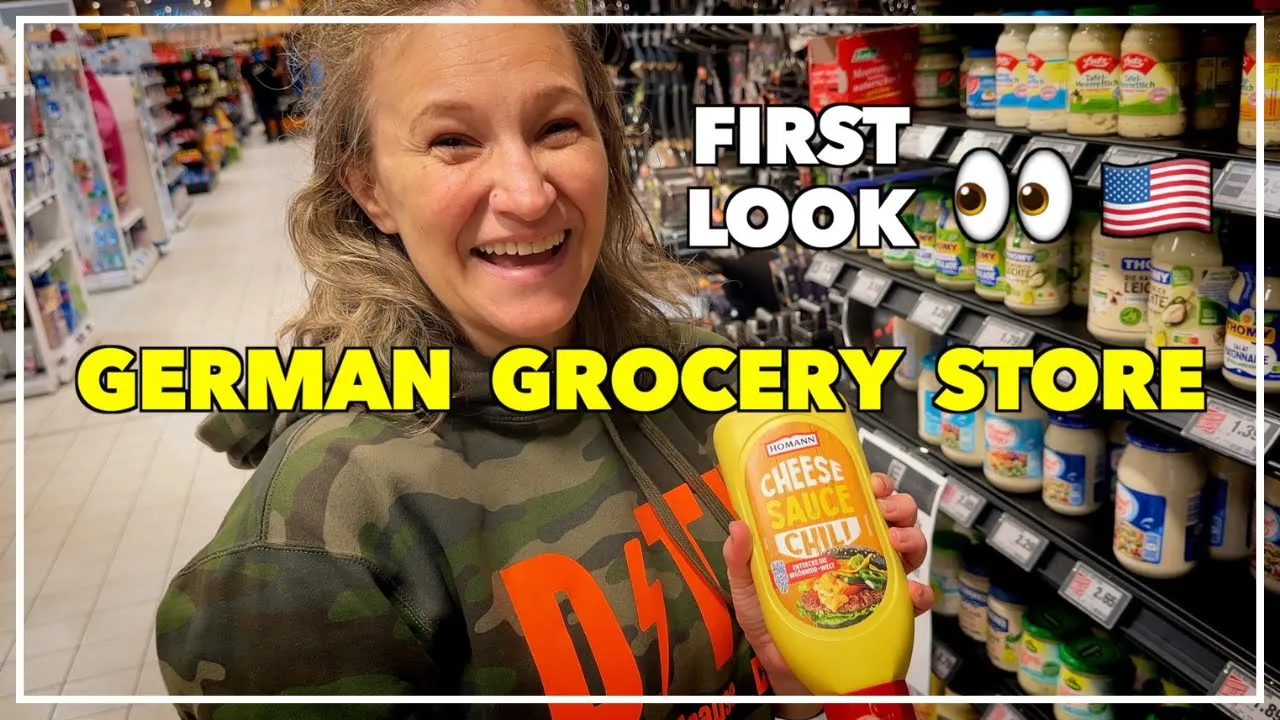
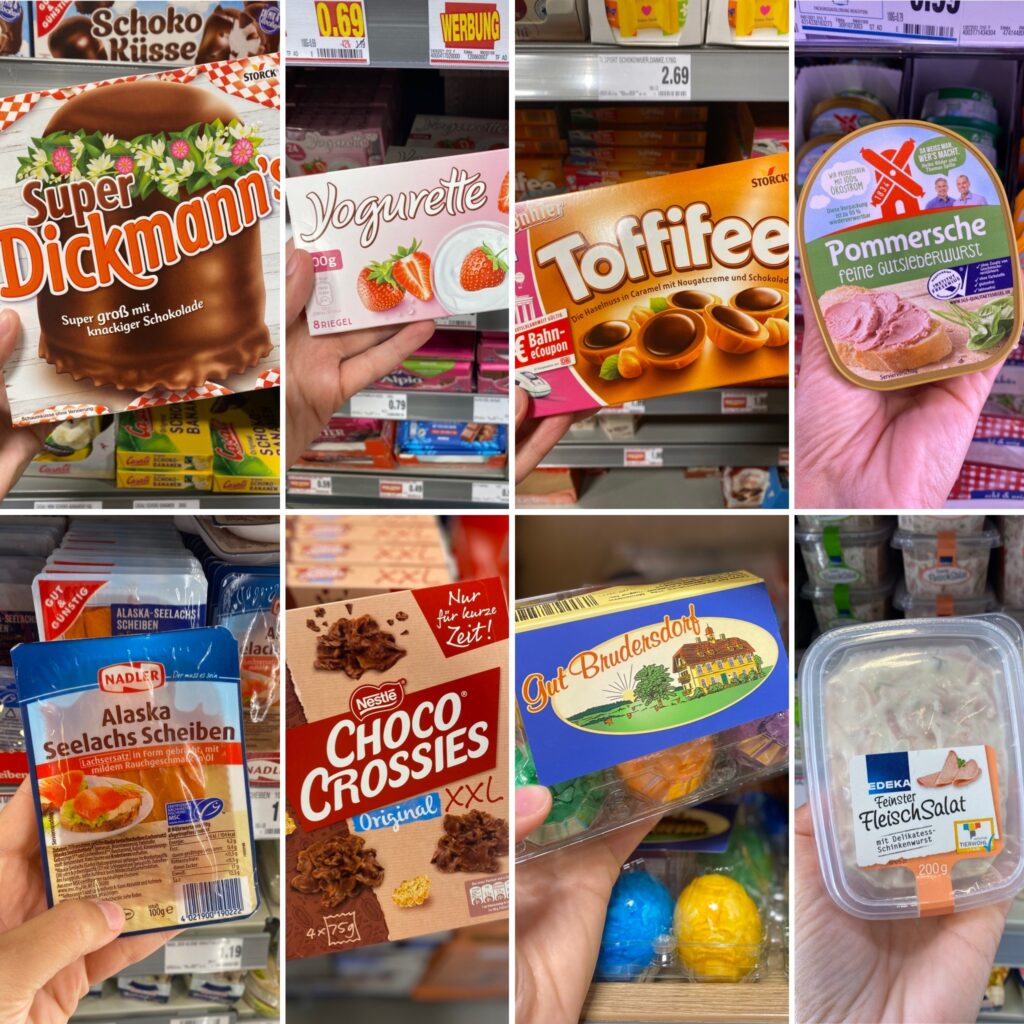
Here’s a lighthearted take of what your first week of grocery shopping looks like in Edeka (Landstuhl Haag) Germany

4) Price Savings (Without Sacrificing Quality)
Yes, Edeka isn’t a discount store like Aldi or Lidl, but you can save money shopping smartly here. They run weekly specials, offer loyalty programs, and price match on staple items. For many expats, the balance of quality, selection, and savings makes Edeka worth the few extra cents.
5) Shopping Experience
Edeka just feels different. Stores are usually cleaner, more spacious, and better organized than discount supermarkets. Produce displays look fresh, aisles are easy to navigate, and most locations have an in-store bakery.
It’s a more enjoyable place to get your weekly groceries, not just a stop to check off your list.
Whether you’re new to Germany or trying to level up your grocery game, Edeka is one of the first stores worth exploring. It brings a local, quality-driven shopping experience that many Americans learn to love, especially when compared to the typical discount grocery run.
Before you leave the store, don’t forget about the Top 5 Mistakes Americans Make at Edeka!

Discount German Supermarkets
Discount supermarkets are extremely common in Germany and are where many locals do most of their shopping. These stores focus on efficiency, lower prices, and a smaller selection.
Aldi
Aldi in Germany is the original version of the Aldi found in the United States. The layout is simple, prices are low, and most items are private-label brands.
Store brands inlcude:
- Alpmare (fish)
- BeLight (reduced fat products)
- Mühlengold (bread)
- Milfina (milk products)
- Fair & Gut (meat)
- Alpenmark (cheese)
- Gartenkrone (preserved products)
- Gusto (juices)
- Rio d’Oro (juices)
Lidl
Lidl is similar to Aldi but often slightly larger, with more weekly specials and bakery sections. Lidl also operates in the United States, so some Americans find it familiar.
Store brands include:
- Cavabel (spreads)
- Grafschafter (bread & baking products)
- KingFrais (yogurts)
- Milbona (milk products)
- Oldenländer (meat)
- Kania (spices)
- Gebirgsjäger (cold cuts/bacon)
- Dulano (processed meat)
- Favorina (Christmas cookies)
- Grafenwalder (beer)
Penny
Penny is a budget-focused grocery store with fewer frills and a smaller selection. It’s often found in city centers and residential areas.

Netto
Netto is another discount supermarket, known for aggressive pricing and a no-frills shopping experience.
Store brands include:
- BioBio (organic food)
- Viva Vital (health products)
- Genusswelt Luxus (gourmet foods)
- Schokoliebe (chocolates)
- Gut Ponholz (meat)
Norma
Norma is a smaller, budget discount grocery store with a limited selection. It’s useful for basic staples but not ideal for full grocery hauls.
Store brands include:
- Cremisee (cheese)
- Gut Langenhof (chicken)
- Landfein (milk products)
- Nimm’s Leicht (light products)

Hypermarkets: The Closest Thing to Walmart
Kaufland
Kaufland combines a large grocery store with household goods and seasonal items. It feels similar to a Walmart Supercenter but with a stronger focus on food.
Store brands include:
- K-Classic (“knock off” brand)
Globus
Globus is often considered the closest thing to Walmart in Germany. These large stores carry groceries, electronics, clothing, household items, and more, all under one roof.



Bonus: Shopping at the Commissary On Base
For Americans living in Germany, the Commissary is often the first place people shop because it feels familiar. While shopping off base at German supermarkets is usually more cost efficient and better for everyday living, the Commissary still plays a role, especially when it comes to comfort foods and American brands.
Advantages of the Commissary
One of the biggest advantages of the Commissary is convenience. It’s located on base, easy to access, and staffed by English speakers from the United States, which makes shopping simple, especially when you’re newly arrived.

The layout is easy to understand and navigate, prices are clearly labeled, and you don’t need to translate anything. It’s also one of the best places to find American comfort foods and seasonal items, particularly around holidays. If you’re looking for a large turkey for Thanksgiving or specific holiday products, the Commissary is often your best option.
Another major benefit is that many Commissaries are open on Sundays, which is rare in Germany and makes last-minute shopping much easier.
Disadvantages of the Commissary
The Commissary is not always the most cost-efficient option, especially when compared to shopping off base using VAT-free benefits. Store size and product availability can vary significantly depending on which military installation you’re stationed at, and some locations feel cramped or understocked.
Quality can also be inconsistent. Many products are shipped from the United States, which means freshness, particularly for produce and meat, isn’t always reliable.
Crowds are another downside. Commissaries tend to be busiest after work and on weekends, and you’ll often run into people you weren’t planning on seeing. Finally, shopping exclusively at the Commissary doesn’t feel like living overseas. It keeps you in a U.S. bubble and limits immersion into German culture and daily life.
Can You Bring Friends On Base to Shop?
This is one of the most common questions Americans get after moving to Germany, and the answer depends on status and base access, not just who you know.
SOFA status members (active duty, some TDY personnel, U.S. civilians, and command-sponsored family members) are authorized to shop on base as long as they are properly enrolled in DEERS for benefits and registered in DBIDS for base access.

Non-SOFA members, such as retirees and disabled veterans, may access the base with the appropriate military ID and a customs pink card. Shopping is allowed, but German VAT applies, even when purchases are made on base.
Regular civilians, including German friends, visiting family members, and American civilians living in Germany without base privileges, can NOT access the base alone. They must be sponsored by someone with base access. Longer visits may qualify for a visitor pass through the IACS office, depending on the installation.
It’s also important to understand where purchases are allowed. Food courts do not require an ID to purchase, while the PX, BX, and Commissary always require authorized ID.

Bottom line:
SOFA status matters. Base access does not automatically mean tax-free shopping. And if you’re bringing friends, Taco Bell is usually the easiest win, your German friends will love it!
The smartest approach for most Americans is to use both. Shop off base at German supermarkets for better value, fresher food, and everyday essentials, and use the Commissary for comfort foods, American brands, and holiday-specific items.
Save Money While Shopping at German Supermarkets
One of the biggest rewards of living in Germany as an American under SOFA status is the ability to shop on the economy while legally saving money through tax free benefits. Many Americans overlook this at first, but it can add up to thousands of euros in savings over the course of a tour.
When shopping off base, eligible U.S. military members and civilian employees can avoid paying German VAT by using a VAT form. This applies to many everyday purchases, including furniture, electronics, home goods, and larger household expenses. The VAT form is typically used for higher value purchases and must be presented at the time of sale.
For smaller, everyday purchases, many Americans are now switching to a more convenient option. The Remonon app allows you to claim VAT refunds on micro purchases under €250 without paperwork.
Instead of filling out forms, you simply take a picture of your receipt in the app and submit it digitally. This makes it much easier to save money on routine shopping trips at German supermarkets and local stores.
Using these tax free benefits consistently can significantly reduce your cost of living and is one of the most underutilized advantages of being stationed in Germany.
Once you build the habit, saving money while shopping on the economy becomes second nature.
Discount and General Retail Stores
Some stores are not supermarkets but are commonly used alongside grocery shopping.
- Action = Big Lots style discount retail
- HEMA = Mini Target
- Tedi = Dollar General or 99¢ store
- Kik and Famila = K-Mart style discount stores
- Woolworths (Germany) = Discount department store for clothing and home goods
Clothing and Shoes
- Deichmann = Payless Shoes
- C&A = Macy’s or JCPenney (clothing section)
- H&M = H&M
- Primark = Discount fashion similar to H&M
- Takko Fashion = Old Navy or Ross style clothing
- TK Maxx = TJ Maxx (same company, European name)
Health, Beauty, and Pharmacy
Germany separates beauty and household items from prescription medications.
- DM (Drogerie Markt) and Rossmann = Walgreens or CVS for toiletries, cosmetics, and household goods
- Apotheke = Pharmacy for prescriptions and medical advice
- Douglas = Sephora
Electronics and Home Improvement
- MediaMarkt and Saturn = Best Buy
- Hornbach = Home Depot
- Obi = Home Depot or Lowe’s
Sports and Outdoor Stores
- Decathlon = Dick’s Sporting Goods
Confident German Shopping
Once you understand how German supermarkets and stores are structured, everyday life in Germany becomes much easier.
Instead of expecting one store to have everything, you’ll know exactly where to go for groceries, household items, clothing, and specialty products.
If you want to shop more confidently and avoid surprises while living in Germany, subscribe to me on YouTube and grab my Free PCS checklist so you’re prepared for everyday life here from day one.
RELATED CONTENT



This is sooo helpful. We’ve been here a year and I have so much anxiety about shopping off base that I hardly go. 🙁 I want to do better, and this info is wonderful to have. Thank you so much!
Oh no, you should definitely try shopping off base, there’s so much to discover out there 🙂 Let me know if you have any questions, thanks for reading!